

.jpg)
Luxury in a home is easy to associate with the things we can immediately see.
An impressive kitchen, a statement staircase, expensive materials or a dramatic feature can undoubtedly contribute to the character of a property.
But the homes that feel truly exceptional rarely rely on any one of these things.
In our latest blog, we explore why the most exceptional homes don’t need to shout, and how space, proportion, natural light and craftsmanship can have a far greater impact than statement features alone.
Their quality is often quieter. It can be found in the proportions of a room, the way natural light moves through the home, how one space leads naturally into another and the precision with which materials and architectural details come together.
You may not consciously notice every decision, but you experience the result of them from the moment you walk through the door.
Start With the Space, Not the Statement
Before materials, furniture or finishes are introduced, the architecture has already established much of how a home will feel.
Spatial planning determines where rooms sit in relation to one another, how you move between them and what you see as you travel through the house.
The strongest layouts aren’t simply collections of individually impressive rooms. They create relationships between spaces, balancing openness with privacy and allowing different areas of the home to serve their purpose without feeling disconnected.
A view revealed at the end of a hallway, a kitchen positioned to connect naturally with the garden or a quieter room placed away from the main living spaces may not immediately register as luxurious features.
But these decisions shape the experience of living in the home every single day.
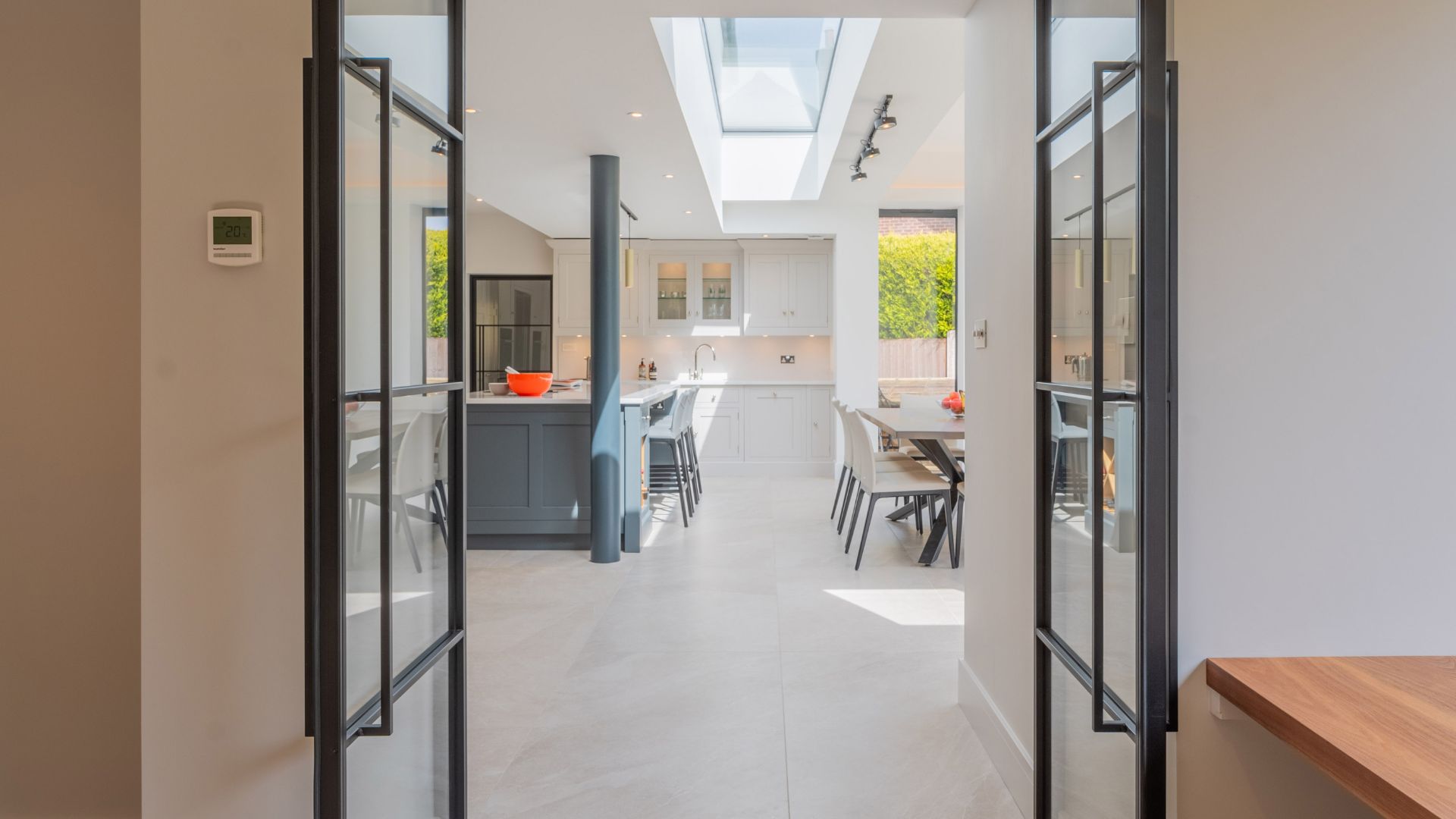
Proportion Can Be More Powerful Than Size
Large rooms can be impressive, but size alone doesn’t create a sense of quality.
The relationship between the width and length of a room, it’s the ceiling height, the scale of its windows and the openings into adjoining spaces all influence how balanced it feels.
A room can be generous without feeling huge, just as a smaller space can feel beautifully proportioned rather than compromised.
Getting those relationships right allows the architecture to feel natural and effortless. Nothing appears unnecessarily oversized or awkwardly constrained; each space simply feels appropriate for its purpose.
It’s a subtle distinction, but one that can have a significant effect on how an entire home is experienced.
.jpg)
Natural Light Should Do More Than Make a Room Bright
Large expanses of glazing are often associated with contemporary luxury, but more glass doesn’t automatically create better architecture.
The position and orientation of windows determine where light enters, how it changes throughout the day and what it draws attention to within a room.
A carefully positioned window might frame a particular view. Rooflights can bring daylight into parts of a plan that would otherwise feel enclosed, while glazing between spaces can allow light to travel further through the home.
There are also moments when less glazing can be equally important. A more enclosed space can provide contrast, privacy or a different atmosphere from a bright, open living area.
The aim isn’t simply to maximise daylight. It’s to use it deliberately.
.jpg)
Craftsmanship Is Often Found in What You Barely Notice
Some of the most valuable work within a bespoke home is deliberately understated.
Bespoke joinery that fits perfectly within the architecture, shadow gaps that create clean transitions, doors integrated into wall panelling or carefully aligned materials may not be the first things somebody notices when entering a room.
That is often precisely the point.
Good craftsmanship removes visual distractions. It allows complex construction and detailing to appear simple because the work required to achieve it has been resolved behind the finished surface.
These details reward closer attention, but they also contribute to the wider sense that everything within the home belongs exactly where it is.
.jpg)
Give the Architecture Room to Breathe
When every surface, material or feature is competing to attract attention, individual elements can quickly lose their impact.
Restraint allows the important things to stand out.
That might mean allowing a beautiful piece of stone to become the focus of a kitchen rather than surrounding it with competing finishes, or keeping the architecture around a significant view deliberately simple so that the landscape becomes the feature.
It doesn’t mean creating homes without character. It means deciding where detail adds something and where simplicity is more powerful.
The result is a home with moments of interest, rather than one that demands attention everywhere at once.
.jpg)
Closing Thoughts
The most exceptional homes don’t need to demonstrate their quality at every opportunity.
Their luxury is experienced through space, proportion, light, materials and craftsmanship working together as part of one architectural vision.
There can still be dramatic moments, beautiful materials and striking features. But their impact is greater when they sit within a home where the fundamentals have been resolved just as carefully.
Ultimately, it is often the decisions that attract the least attention that make the greatest difference to how a home feels.
If you would like to discuss your project with us, please call 01625 402442 or email us to arrange a free initial consultation.
A Vision Inspired by Outstanding Design


-p-800.jpg)


