


When a home no longer quite works for the way you live, the obvious question is often what needs to change.
But before deciding how to change it, there is a much bigger decision to make.
Should you work with the house you already have? Add the space it’s missing? Or would starting again ultimately create a better home?
In our latest blog, we explore how to decide whether to renovate, extend or start again, looking beyond additional space to consider the potential of the property and the home you ultimately want to create.
There isn’t a single answer that applies to every property. In some cases, a thoughtful remodel can completely transform the way an existing home feels and functions. In others, an extension can unlock its potential. And occasionally, the limitations of the existing building mean that replacing it provides greater freedom to create the home you actually want.
Understanding which approach is right means looking beyond additional square footage and considering the property as a whole.
Start With What You Already Have
Before thinking about what could be added, it’s worth understanding what is already working.
An existing home may have generous proportions, attractive architectural features, good orientation or a relationship with its surroundings that would be difficult to recreate. Even when the layout itself isn’t working particularly well, there may be plenty worth retaining.
Sometimes the problem isn’t a lack of space at all.
Poor circulation, disconnected rooms or an awkward relationship between the house and garden can make a reasonably sized property feel far less successful than it should. Reconfiguring the existing footprint can sometimes solve these problems without substantially increasing the size of the home.
The starting point should therefore be identifying what is worth keeping, rather than immediately deciding what needs to go.
When an Extension Makes Sense
There are, of course, occasions when a home genuinely needs more space.
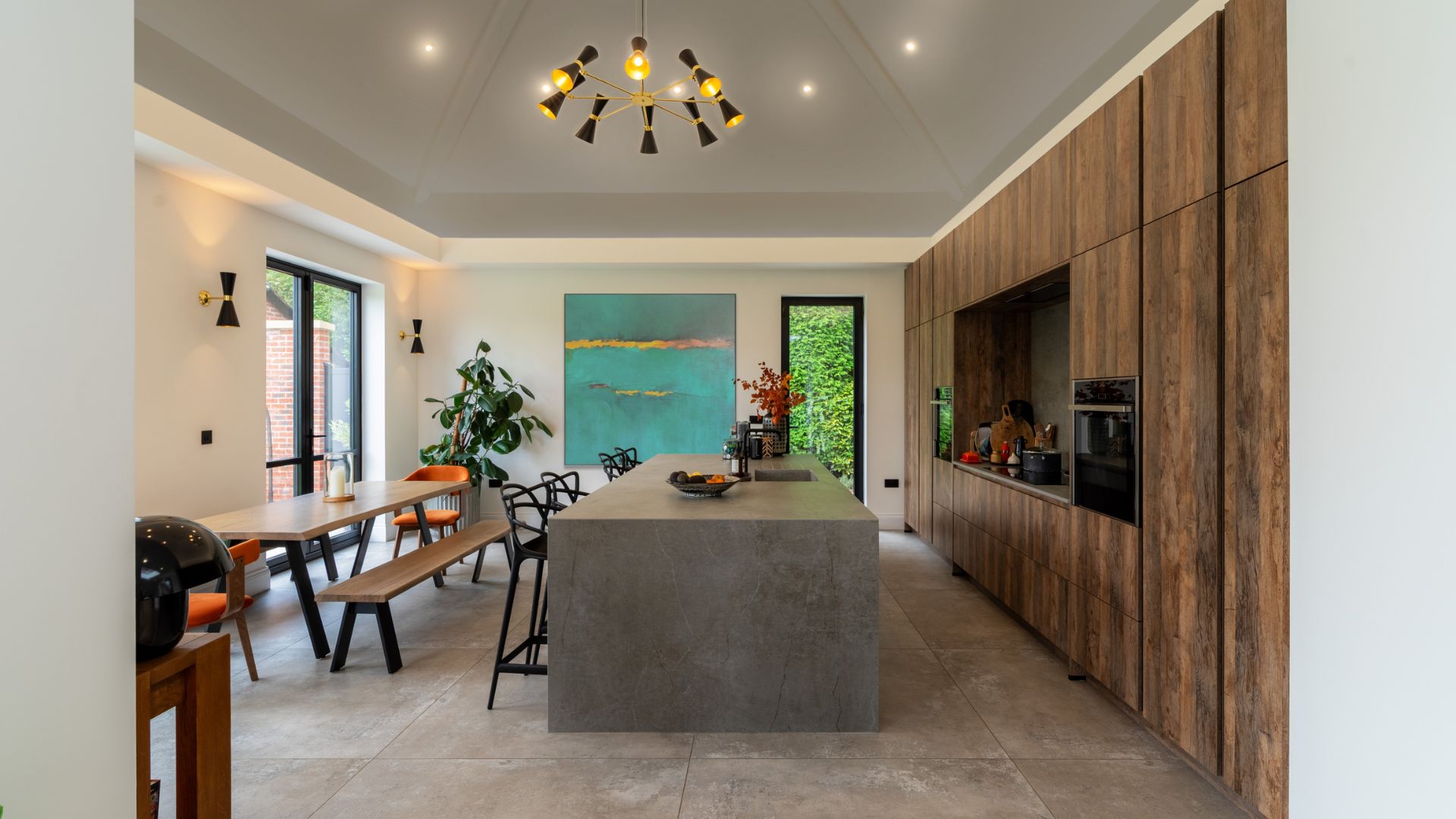
An extension can create the opportunity for a larger kitchen and living area, an additional bedroom, a dedicated home office or simply the breathing room that the existing property lacks.
But adding floor area alone doesn’t guarantee a better home.
An extension changes the relationship between existing rooms, affects how natural light reaches the original building and alters the way you move through the property. A poorly positioned addition can leave rooms in the centre of the house darker or create spaces that feel disconnected from one another.
The most successful extensions therefore aren’t simply treated as additional space attached to an existing house. They’re designed as part of a wider reconsideration of how the entire home should work.
.jpg)
Recognising When the Existing House Is the Limitation
There comes a point where working around an existing building can begin to create more compromises than solutions.
Low ceiling heights, unsuitable orientation, structural limitations, inefficient construction or a footprint that simply doesn’t lend itself to the way you want to live can all restrict what is realistically achievable.
Individually, these challenges can often be addressed. When several exist within the same property, however, the project can gradually become an exercise in working around the original building.
At that stage, it is worth asking a different question: if you weren’t starting with this house, would you design the new one this way?
If the answer is no, exploring the possibility of replacement may be worthwhile.
.jpg)
Starting Again Can Offer Greater Freedom
Replacing an existing property is a significant decision, but it can provide an entirely different level of design freedom.
Rather than adapting your lifestyle around an inherited footprint, a new home can be designed around the site, its orientation, the surrounding views and the way you want to live from the outset.
Room proportions, circulation, natural light, energy performance and the relationship between internal and external spaces can all be considered together rather than being constrained by an existing structure.
There can also be financial implications to consider. For example, qualifying new-build projects can be subject to different VAT treatment from renovation and extension work. The circumstances of each project need to be assessed individually, but it’s another reason why comparing the options purely on headline construction costs can be misleading.
.jpg)
Don’t Make the Decision Based on Size Alone
It’s easy to assume that the solution to a home that isn’t working is simply to make it bigger.
Often, it isn’t.
A smaller home with excellent proportions, natural light and intuitive circulation can feel considerably more generous than a much larger property with an inefficient layout.
Before deciding whether to renovate, extend or replace, it’s important to establish what you actually want the project to improve.
More space may be the answer, but better light, stronger connections with the garden, greater privacy, improved energy performance or simply a layout that better reflects everyday life may ultimately matter much more.
.jpg)
Closing Thoughts
Choosing whether to renovate, extend or start again isn’t simply a question of how much work you’re prepared to undertake.
It’s about understanding the potential of the property you already have and whether that potential aligns with the home you ultimately want to create.
Sometimes the best architecture comes from retaining what already works and making a small number of transformative changes. In other cases, an extension completely reshapes the way a home is experienced. And sometimes the greatest opportunity comes from starting with a blank page.
Exploring those possibilities at the beginning of a project can help ensure that you’re investing in the right solution, rather than simply the most obvious one.
If you would like to discuss your project with us, please call 01625 402442 or email us to arrange a free initial consultation.
A Vision Inspired by Outstanding Design

-p-800.jpg)
.jpg)


