

-p-800.jpg)
A home can be beautifully designed, filled with exceptional materials and finished to an incredibly high standard, yet still feel as though something is missing.
Creating a home that feels warm and inviting isn’t simply a matter of choosing warmer colours or introducing softer furnishings. It comes from the relationship between the architecture and everything within it.
In our latest blog, we explore how architecture, materials, lighting and interior design can work together to create a home that feels warm, welcoming and genuinely enjoyable to live in.
Materials, lighting, texture, furniture, colour and the smaller details you experience every day all influence the atmosphere of a room. When these elements are considered together from the beginning, they can transform impressive spaces into homes that feel comfortable, welcoming and genuinely enjoyable to live in.
Warmth Doesn’t Have to Mean Traditional
There is sometimes an assumption that contemporary interiors naturally feel cooler or less inviting.
They don’t have to.
Clean architectural lines, large expanses of glazing and open spaces can provide a beautiful foundation for an interior, but what sits alongside them becomes particularly important.
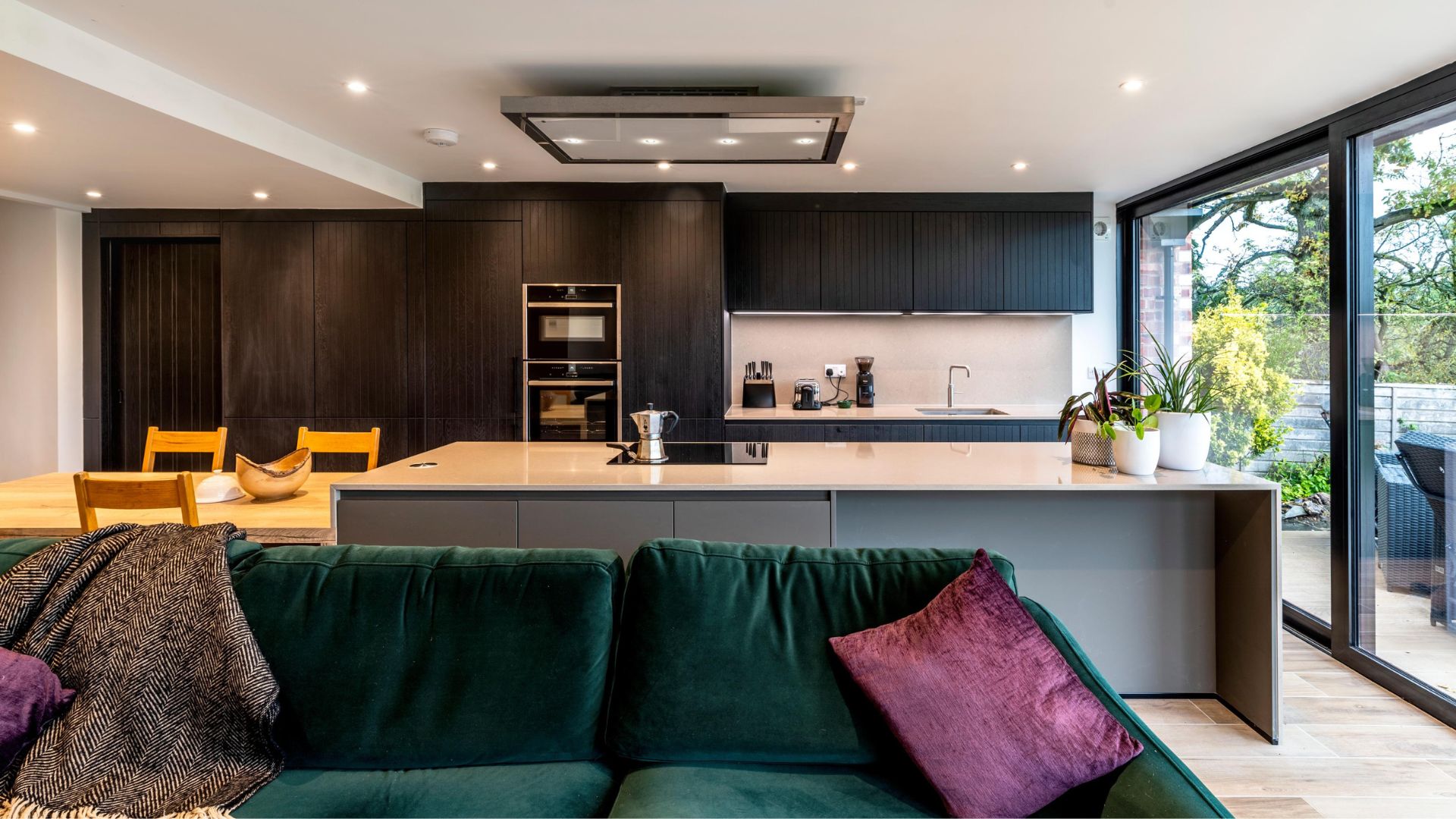
Natural timber can introduce warmth against stone or painted finishes. Textured fabrics can soften harder architectural surfaces, while warmer metals and contrasting finishes can add depth without compromising a contemporary aesthetic.
The aim isn’t to fill a room with traditionally ‘cosy’ features. It’s to create enough contrast between materials, textures and finishes that the space feels layered rather than clinical.
Think About Materials as a Whole
Individual materials rarely exist in isolation.
A stone floor might look beautiful on its own, as might a timber kitchen, painted joinery or a particular fabric. But the success of an interior depends on how those materials sit alongside one another.
Too many hard surfaces can change both the appearance and acoustics of a room. Too many competing finishes can make an interior feel visually unsettled. Conversely, repeating materials or tones in different areas of the home can create a subtle sense of continuity.
This is where developing the interior alongside the architecture becomes particularly valuable.
Rather than choosing finishes room by room towards the end of a project, a considered material palette can be developed across the entire home, allowing different spaces to have their own character while still feeling as though they belong together.
.jpg)
Use Lighting to Change How a Space Feels
Lighting has an enormous influence on the atmosphere.
A room needs different types of light at different times of the day. The bright, practical lighting needed when preparing food is very different from the softer lighting you might want when sitting down in the evening.
Rather than relying on a single source of overhead lighting, combining different layers allows the atmosphere of a space to change.
Architectural lighting can highlight materials and important features, task lighting can provide illumination exactly where it is needed, while lamps and decorative fittings introduce softer pools of light at a human scale.
Considering these elements early also allows lighting to become part of the architecture itself, rather than something that has to be accommodated once everything else has been decided.
.jpg)
Don’t Leave the Interior Until the End
Some of the most successful interior details depend on decisions made much earlier than people might expect.
The position of a sofa can influence where electrical points and lighting need to be. A piece of artwork may determine the position of a wall light. Bespoke joinery needs to relate to the proportions of the room, while furniture layouts can affect circulation and even the position of doors.
In larger spaces, furniture can also help create smaller, more intimate areas for conversation or relaxation, bringing a sense of comfort without compromising the generosity of the architecture.
Leaving these decisions until construction is almost complete can mean working around choices that have already been made.
Considering architecture and interior design together allows these details to inform one another from the outset. The result is an interior that feels integrated into the building rather than added to it afterwards.
.jpg)
Closing Thoughts
Warm and inviting interiors aren’t created by following a particular style.
They come from understanding how architecture, materials, lighting, furniture and finishes work together to shape the experience of a space.
Some of those decisions are immediately noticeable. Others are deliberately quiet. But when they are considered as part of one overall design, the result is a home that feels cohesive, comfortable and personal rather than simply beautifully finished.
By thinking about the interior from the earliest stages of a project, it becomes possible to create spaces where the architecture and everything within it feel entirely connected.
If you would like to discuss your project with us, please call 01625 402442 or email us to arrange a free initial consultation.
A Vision Inspired by Outstanding Design

.jpg)
.jpg)


