

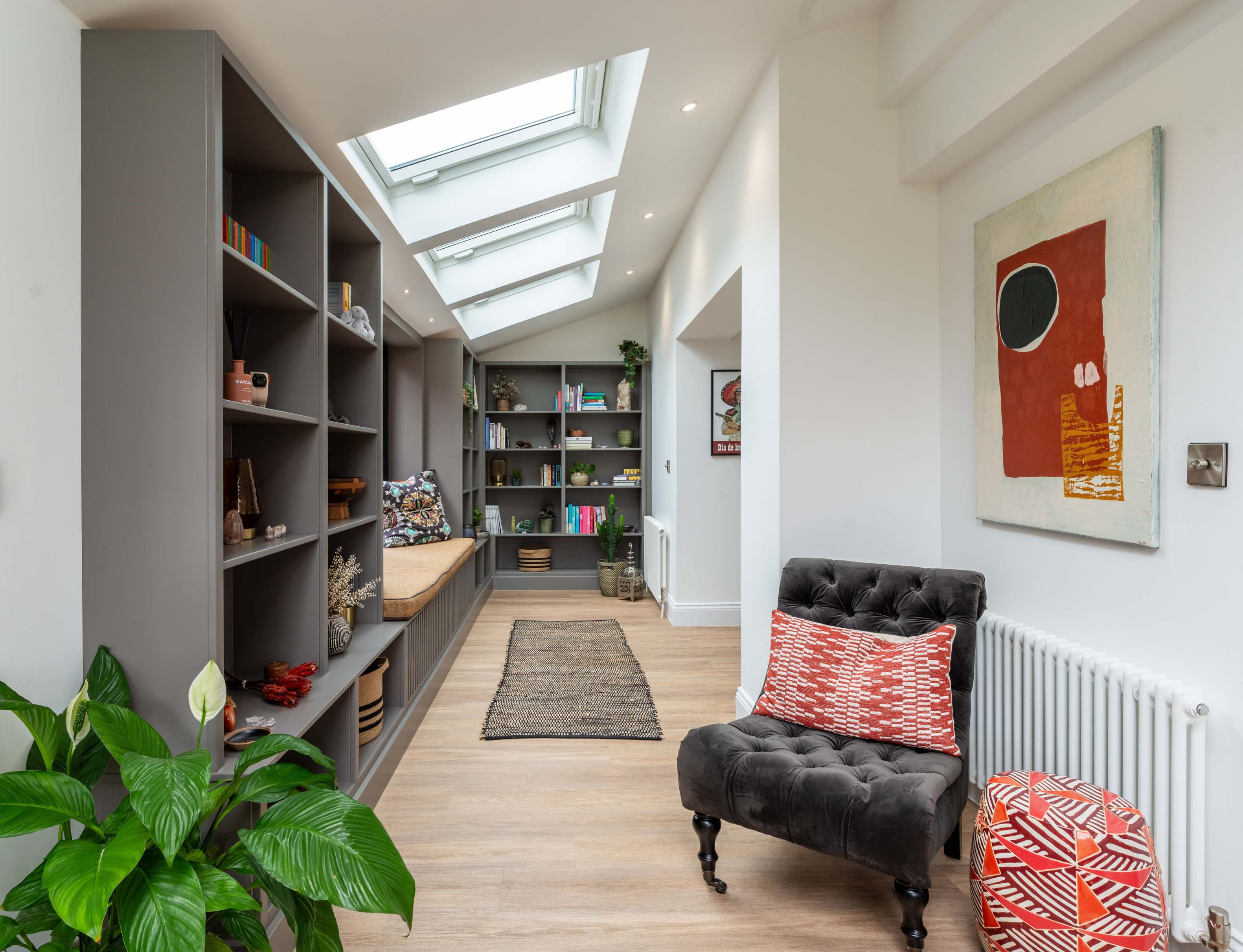
In our latest blog, we discuss the skill of designing your home around your artwork.
In many homes, artwork is treated as the finishing touch - something selected once the walls are painted and the furniture is in place.
We often see the opposite.
For many of our clients, art is not an accessory.
It is deeply personal. It tells a story. It anchors a room.
And when approached properly, it can shape the architecture itself.
Designing a home around artwork is not about creating a gallery.
It is about allowing meaningful pieces to influence space, proportion and atmosphere from the very beginning.
Begin With What Matters
The starting point is understanding the collection.
Is it a single statement piece that demands focus?
A growing collection of contemporary works?
Large-scale canvases? Works on paper? Or even a sculpture?
Scale is crucial.
A substantial painting requires breathing room - generous walls, considered sightlines and space to step back.
Smaller works may benefit from intimacy, framed by joinery or positioned within quieter transitional areas.
When artwork forms part of the early design conversation, wall lengths, ceiling heights and architectural framing can be shaped around it - rather than retrofitted later.
Light: The Quiet Collaborator
Light determines how art is experienced.
Natural light can bring depth and life to a painting, but it must be carefully managed. For example, direct sunlight may cause damage or unwanted glare.
Rooflights, high-level glazing and filtered daylight allow artwork to be illuminated without overwhelming it.
Generous roof glazing and precisely positioned openings introduce soft, controlled light that enhances texture and colour without competing with it.
Artificial lighting should be layered and discreet - wall washers, recessed spotlights or concealed LED integrated within joinery.
The aim is not theatrical spotlighting, but quiet emphasis.
.jpg)
Architecture as Frame
Sometimes the architecture itself becomes the frame.
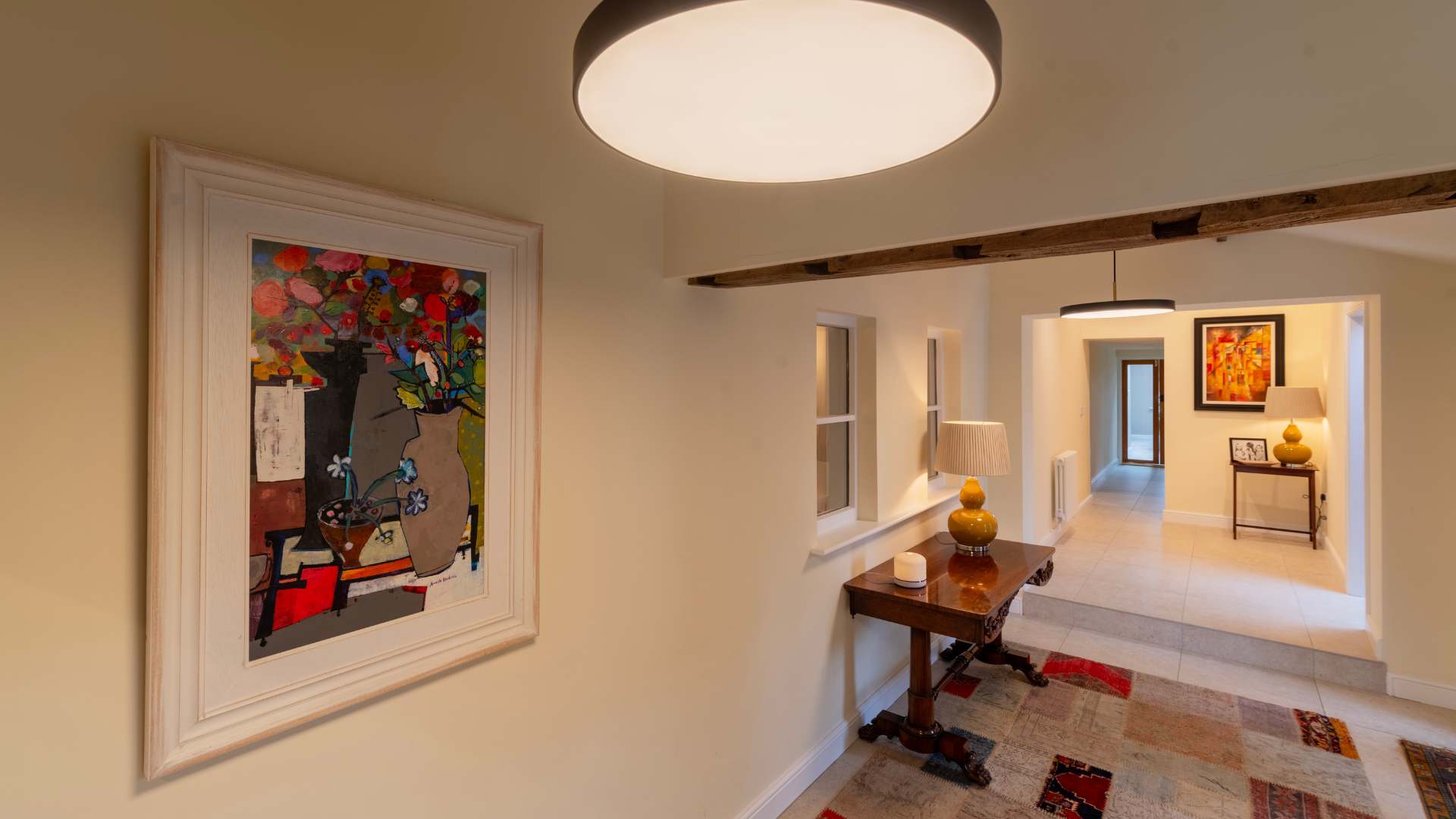
Recessed niches, full-height wall planes and carefully proportioned corridors create moments where artwork can sit comfortably within the spatial rhythm of the home.
A double-height stairwell, for example, offers an opportunity for vertical works to draw the eye upward, reinforcing a sense of volume.
Long gallery-like hallways can become curated journeys, where art punctuates movement through space.
In more contemporary settings, clean lines and restrained material palettes allow bold or expressive works to take centre stage.
In other projects, warmth from timber joinery or textured finishes provides a rich backdrop that complements rather than competes.
.jpg)
Colour and Material as Supporting Cast
Designing around artwork does not mean replicating its colours throughout the interior. In fact, restraint is often more powerful.
Neutral architectural palettes - soft plaster tones, natural timber, stone - provide calm backdrops that allow colour and form within the artwork to stand out.
Materiality matters just as much as colour. The warmth of oak flooring, the depth of bronze detailing, or the subtle texture of lime plaster can all enhance how artwork is perceived within a room.
The goal is cohesion, not coordination.
.jpg)
Closing Thoughts
Designing a home around artwork requires early communication and dialogue - between the architect, interior designer and client.
Understanding scale, future acquisitions and how a collection may evolve allows facilitates future-proofing of wall space, lighting strategies and joinery.
It ensures that each piece has the presence it deserves.
For clients who are collectors, this approach transforms a home into something deeply personal - a space that reflects not only how they live, but what they value.
If you would like to discuss your project with us, please call 01625 402442 or email us to arrange a free initial consultation.
A Vision Inspired by Outstanding Design


.jpg)


