


There is a noticeable difference between a home that looks well designed and one that feels it.
Often, that difference is not defined by materials or finishes.
It is shaped by how the space is organised - how it flows, how it supports movement and how it responds to daily life.
At Kimble Roden, this begins at the earliest stages of a project - long before materials or interior details are discussed.
It comes from clarity in planning - from understanding how a home will be lived in and designing around that from the outset.
When this is done well, the experience of the home feels natural.
Not because it is simple, but because it is coherent.
Flow as the Foundation
Flow is often spoken about in abstract terms. In practice, it is something very precise.
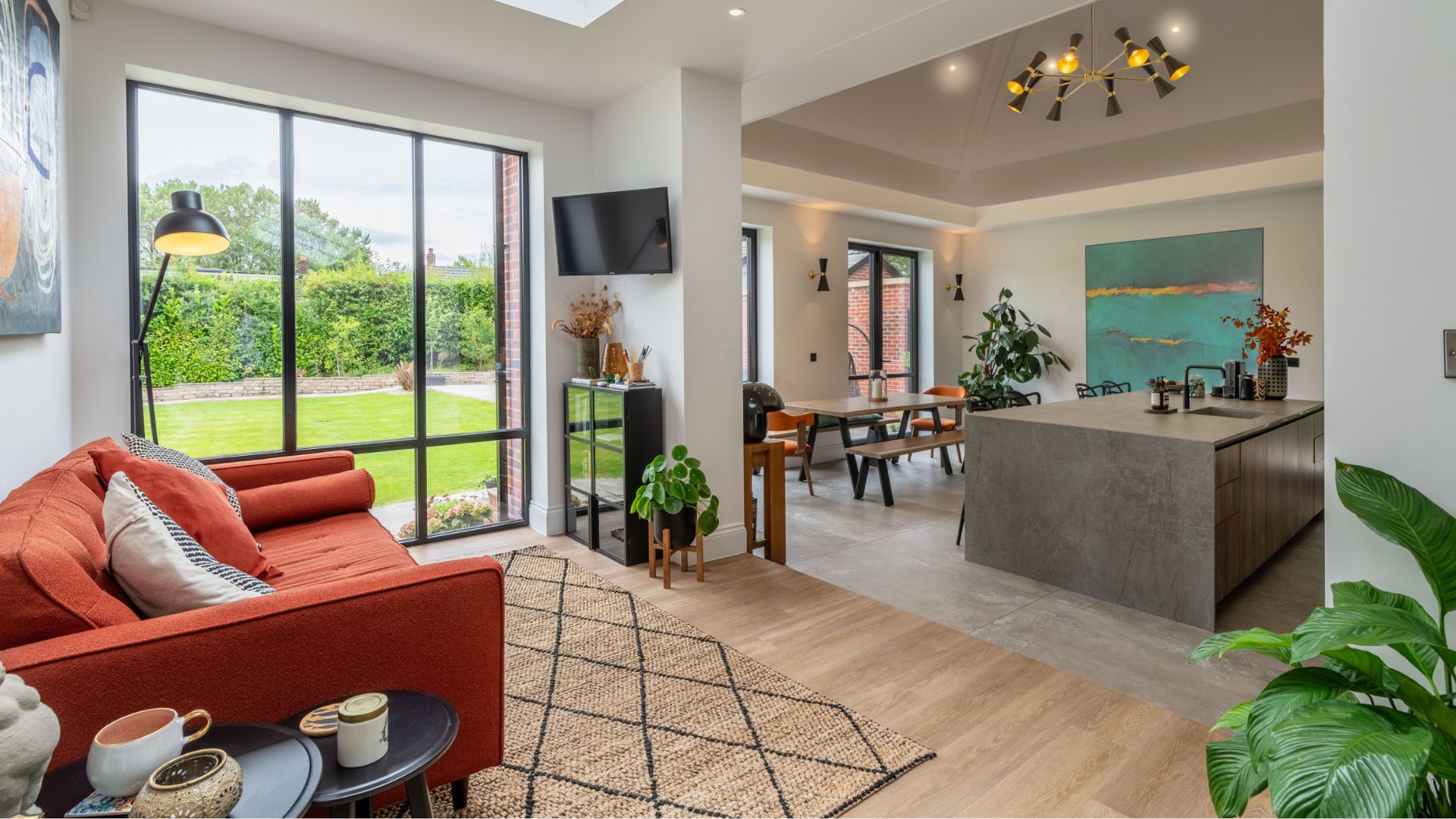
It is the way you move through a space without hesitation. The way one room leads to another without interruption. The way circulation feels intuitive rather than imposed.
This is not accidental. It is established early through spatial planning - typically during the concept design phase, where the arrangement of rooms, routes and relationships are first defined.
At this stage, decisions around layout carry more weight than any finish or detail that follows.
When flow is considered properly, the home begins to organise itself around the way it is used.
Movement becomes effortless. Spaces feel connected. The architecture supports daily routines rather than competing with them.
Designing for How Life Is Lived
Homes are often designed around individual rooms.
Living room. Kitchen. Bedroom.
But in reality, daily life rarely happens in isolation.
It overlaps. It shifts throughout the day. It moves between spaces in ways that are difficult to define but easy to feel.
This is why the briefing stage is so critical.
Understanding how a client lives - not just what spaces they want - allows the architecture to respond more intelligently.
It informs how spaces relate to one another - not just visually, but functionally: how a kitchen connects to a dining area, how quieter spaces are positioned away from more active ones, and how transitions are handled between different parts of the home.
This level of consideration allows the home to support a lifestyle, rather than simply accommodate it.
.jpg)
Reducing Friction Through Design
Much of what disrupts a sense of calm is not always obvious. It is often found in small points of friction.
Awkward transitions between rooms. Circulation routes that cross unnecessarily. Spaces that compete for the same function. A lack of clarity in how areas are used.
These moments are rarely intentional, but they have a cumulative effect.
Good spatial planning works to remove them - often during the early design and planning stages, where adjustments are most effective and least constrained.
Routes are simplified. Spaces are defined with purpose. Relationships between rooms are carefully considered so that movement feels natural and uninterrupted.
The result is not something that draws attention to itself. It is something that feels easy to live in.
.jpg)
Light, Proportion and Atmosphere
Calm is also influenced by how a space is perceived.
Light plays a central role in this. So does proportion. Both are considered together, rather than in isolation.
At Kimble Roden, considerations such as orientation, natural light and views are explored early in the design process, ensuring they are embedded into the architecture rather than added later.
Natural light that is consistent and well-distributed.
Room proportions that feel balanced rather than exaggerated.
Openings that frame views without overwhelming the space.
These elements work together to create an environment that feels settled. The architecture does not need to rely on excessive detail or intervention. It allows space, light and proportion to define the atmosphere.
.jpg)
Closing Thoughts
Designing calm is not about removing complexity. It is about clarity to it.
At Kimble Roden, this comes through a structured design process - from initial briefing through to planning and detailed design - where each decision builds towards a cohesive whole.
Through considered spatial planning, clear relationships between spaces and an understanding of how a home will be lived in, architecture creates environments that feel composed and intuitive.
The result is not just a well-designed interior. It is a home that supports the way you live - quietly, consistently and over time.
If you would like to discuss your project with us, please call 01625 402442 or email us to arrange a free initial consultation.
A Vision Inspired by Outstanding Design

-p-800.jpg)
.jpg)
.jpg)


