

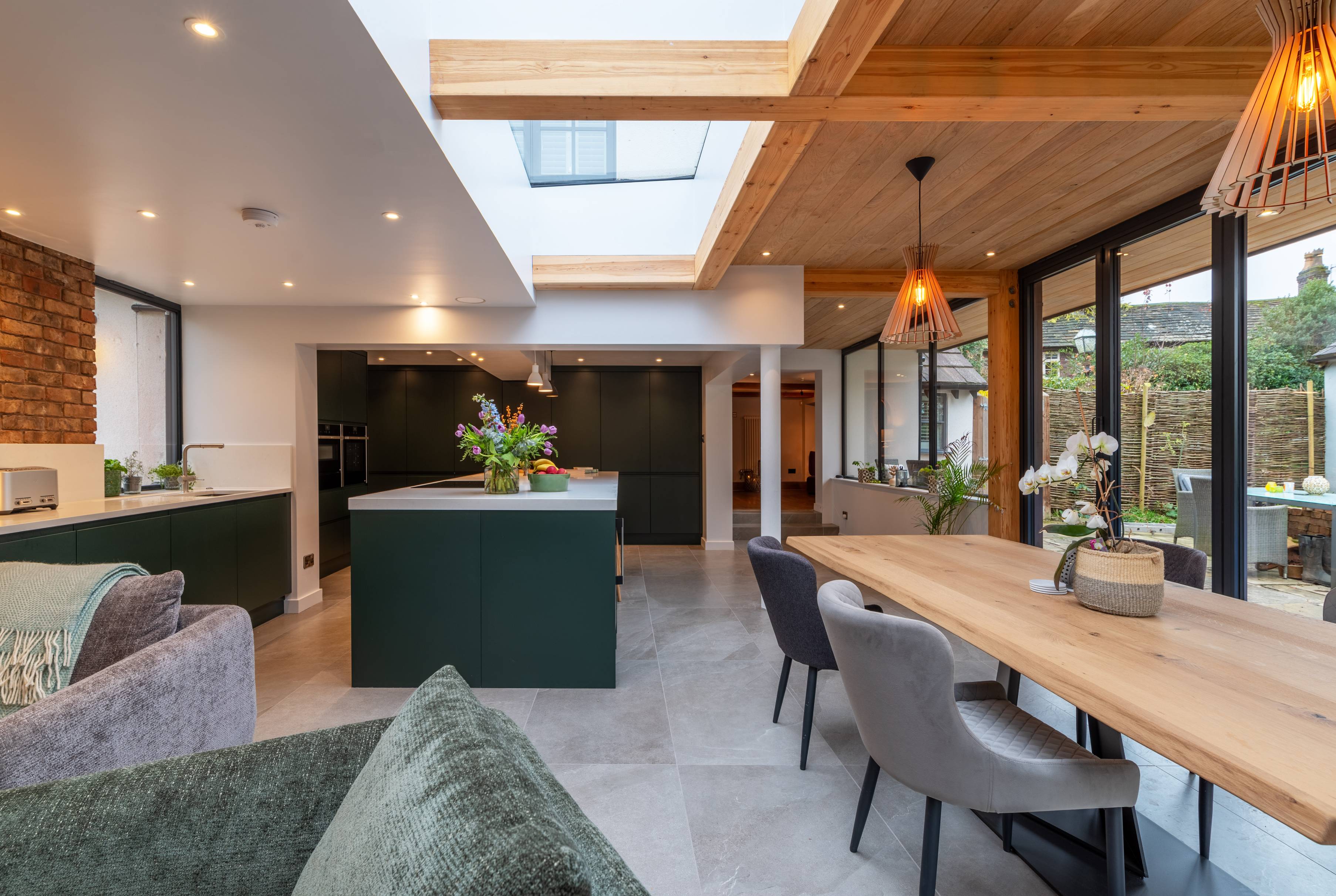
By February, the optimism of the new year often gives way to something more reflective.
People stop thinking about how they want to live and start noticing how they actually do live.
The reality of daily routines settles back - mornings feel rushed and clutter begins to build.
Certain rooms are always in use - while others are quietly bypassed.
It is often at this point that homeowners realise something important: their home has not evolved at the same pace as their life.
At Kimble Roden, we see this disconnect quite often - not because homes are poorly designed, but because life has shifted faster than architecture has traditionally responded.
In our latest blog, we explore the importance of designing homes and spaces around how people live today - not how they lived years ago.
When Homes Stop Working Properly
One of the most common misconceptions we encounter is that if a home looks right, it must function well.
In reality, many beautifully designed homes are structured around habits that no longer exist.
Formal dining rooms that only come alive twice a year.
Kitchens designed as visual centrepieces rather than practical, everyday workspaces.
Living areas that appear impressive, yet feel oddly uncomfortable for extended use.
These are not design failures - they are signs of change.
Working from home, blended family life, informal entertaining, and the growing need for both connection and retreat have fundamentally altered how space is used.
When layouts fail to adapt, friction appears - subtle at first, then persistent.
.png)
Architecture Should Follow Behaviour
At Kimble Roden, we believe that exceptional residential architecture is less about how a house looks on paper, and far more about how it behaves and feels in daily use.
We begin by paying close attention to patterns that clients often overlook:
These behaviours reveal far more than a brief or mood board ever could.
They allow architecture to respond intelligently - not by simply adding more space, but by reshaping how existing space works.
.png)
Rethinking Layouts Without Making Homes Bigger
One of the most valuable realisations for many clients is that their home does not necessarily need to expand - it needs to recalibrate.
By subtly rebalancing space, homes can feel entirely different:
These changes are often understated, but deeply felt.
The home becomes easier to live in - less demanding, more accommodating, and more closely aligned with everyday life.
.png)
Homes That Work Quietly, Every Day
The most successful projects rarely announce themselves. Instead, they are defined by ease.
Spaces feel naturally comfortable. Movement makes sense. Rooms adapt without compromise.
Nothing feels over-designed - and nothing feels unresolved.
This is architecture that responds to real life rather than an idealised version of it.
It does not chase novelty, but it does acknowledge change - allowing homes to evolve with their occupants rather than resist them.
.png)
Closing Thoughts
Designing for how you live now requires honesty - about routines, priorities and the realities of daily life.
When architecture is shaped around behaviour rather than assumption, homes become more intuitive, more resilient and ultimately more enjoyable to live in.
At Kimble Roden, this understanding sits at the heart of our approach - creating exceptional residential architecture that feels calm, considered and naturally aligned with the way life is lived today.
If you would like to discuss your project with us, please call 01625 402442 or email us to arrange a free initial consultation.
A Vision Inspired by Outstanding Design


.jpg)


