


For many years, open-plan living has been one of the defining characteristics of contemporary residential design.
Large kitchen, dining and living spaces became closely associated with modern lifestyles, creating homes that felt lighter, more social and better connected to everyday family life.
In many respects, open-plan design continues to offer significant advantages.
In our latest blog we discuss the evolution of open-plan living and how defined spaces, with greater flexibility and thoughtful zoning, are beginning to shape the future of contemporary residential design.
Open-plan layouts allows natural light to travel more freely throughout the home, improves the relationship between interior spaces and often creates a greater sense of openness within a property overall.
Yet increasingly, there has been a noticeable shift in how these spaces are being designed and used.
Rather than moving entirely away from open-plan living, many homeowners are now looking for a greater sense of separation, flexibility and balance within the home itself.
As a result, defined spaces are beginning to return, though often in more subtle and carefully integrated ways than before.
The Shift Towards More Flexible Living
The way people use their homes has evolved significantly over recent years.
Homes are no longer expected to serve purely as places to cook, relax or entertain. They are now required to support a far broader range of activities throughout the day.
Working from home, quieter routines, multi-generational living and the need for privacy within busy households have all influenced how people experience open-plan environments.
While large open spaces can feel impressive architecturally, they do not always provide the practicality or comfort required for everyday living.
Noise travels more easily. Lighting requirements differ between activities. Without moments of separation, some homes can begin to feel visually overwhelming or lacking in atmosphere.
Increasingly, homeowners are looking for spaces that feel connected without feeling entirely exposed.
Defined Spaces Without Losing Openness
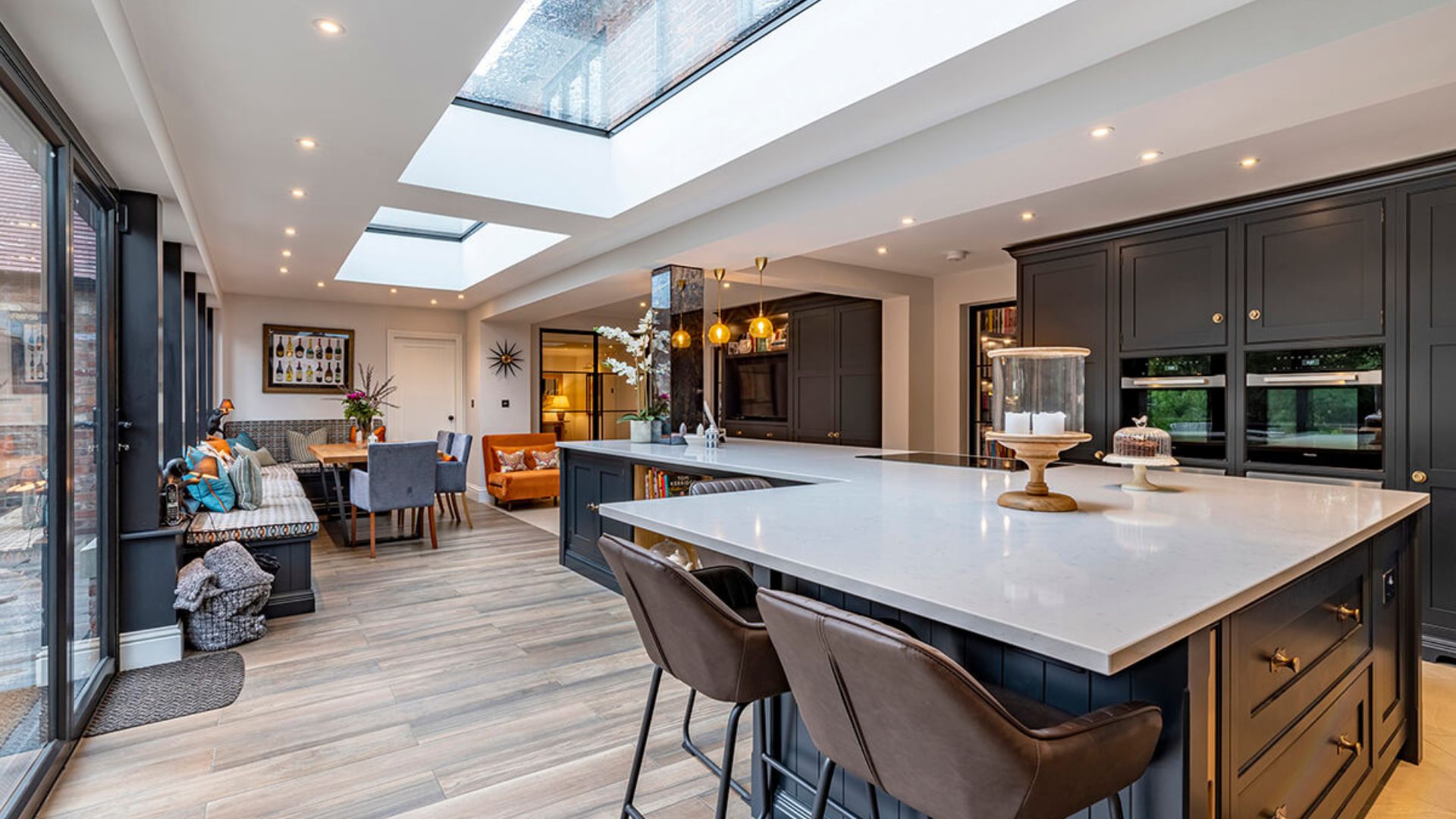
The return of defined spaces does not necessarily mean a return to heavily divided layouts or smaller enclosed rooms.
Instead, many contemporary homes are now incorporating more subtle forms of zoning throughout the architecture itself.
This may involve changes in floor level, ceiling height or material palette to distinguish one area from another without interrupting the overall flow of the home.
In other projects, joinery, partial walls or freestanding architectural elements are used to create a greater sense of structure and intimacy within larger spaces.
The aim is often to create variation within open-plan living rather than removing openness altogether.
When designed carefully, these transitions can make a home feel calmer, more functional and ultimately more comfortable to live in.
.jpg)
The Rise Of Sliding Partitions And Adaptable Spaces
One of the more notable developments within contemporary residential design is the increased use of adaptable architectural elements.
Sliding partitions, pocket doors and concealed screens allow spaces to change depending on how they are being used throughout the day.
A home office may open into a wider living area when not in use. A dining space may feel connected during social occasions but become more enclosed during quieter evenings.
These solutions offer flexibility without compromising the overall architectural language of the property.
Importantly, they also allow homeowners to retain a sense of openness while introducing moments of privacy and separation where needed.
This balance is becoming increasingly important within high-end residential design, where functionality is expected to sit alongside aesthetics rather than compete with it.
.jpg)
Closing Thoughts
Perhaps the most significant shift is not necessarily away from open-plan living itself, but away from the idea that every space within the home should always remain fully open at all times.
The most successful contemporary homes often combine openness with moments of retreat.
Larger social areas are balanced by quieter spaces. Open sightlines are softened by texture, zoning and architectural definition. Movement through the home feels intentional rather than simply expansive.
Ultimately, good residential architecture is rarely about following trends in isolation.
It is about understanding how people want to live within a space over time.
At Kimble Roden, each project is approached with careful consideration towards how spaces connect, separate and adapt to everyday life, helping create homes that feel both functional and deeply considered in equal measure.
If you would like to discuss your project with us, please call 01625 402442 or email us to arrange a free initial consultation.
A Vision Inspired by Outstanding Design

-p-800.jpg)
.jpg)
.jpg)


