


When people think about residential architecture, attention is often drawn towards the primary spaces within a home.
Kitchens designed for entertaining. Open-plan living areas. Principal bedrooms. Statement bathrooms.
These are typically the rooms that define the visual identity of a project.
Yet some of the most important architectural moments within a home are often found in the spaces that sit between them.
Hallways, staircases, landings and connecting spaces play a significant role in how a property feels to move through and experience day to day. While they may not always be the focal point of a design, they are often what creates a sense of flow, rhythm and cohesion throughout the home as a whole.
In many ways, transitional spaces shape how the architecture is experienced over time.
In our latest blog, we explore why transitional spaces play such an important role in shaping the flow, atmosphere and overall experience of a home.
More Than Just Circulation Space
It can be easy to view hallways or staircases simply as functional routes from one room to another.
But within well-designed homes, these spaces become part of the wider architectural experience rather than areas to pass through as quickly as possible.
The movement between rooms influences how a home unfolds gradually.
How light changes throughout the day. How proportions shift as you move between spaces. How certain views are revealed slowly rather than immediately.
These transitions help create a greater sense of calm and balance within the home.
Rather than every room competing for attention individually, the property begins to feel connected and considered as a whole.
The Importance Of Flow
One of the defining characteristics of high-end residential design is often not the size of the property itself, but how naturally the spaces relate to one another.
Poor transitions can make even large homes feel fragmented or uncomfortable to navigate.
By contrast, carefully planned circulation creates a home that feels intuitive and effortless to live in.
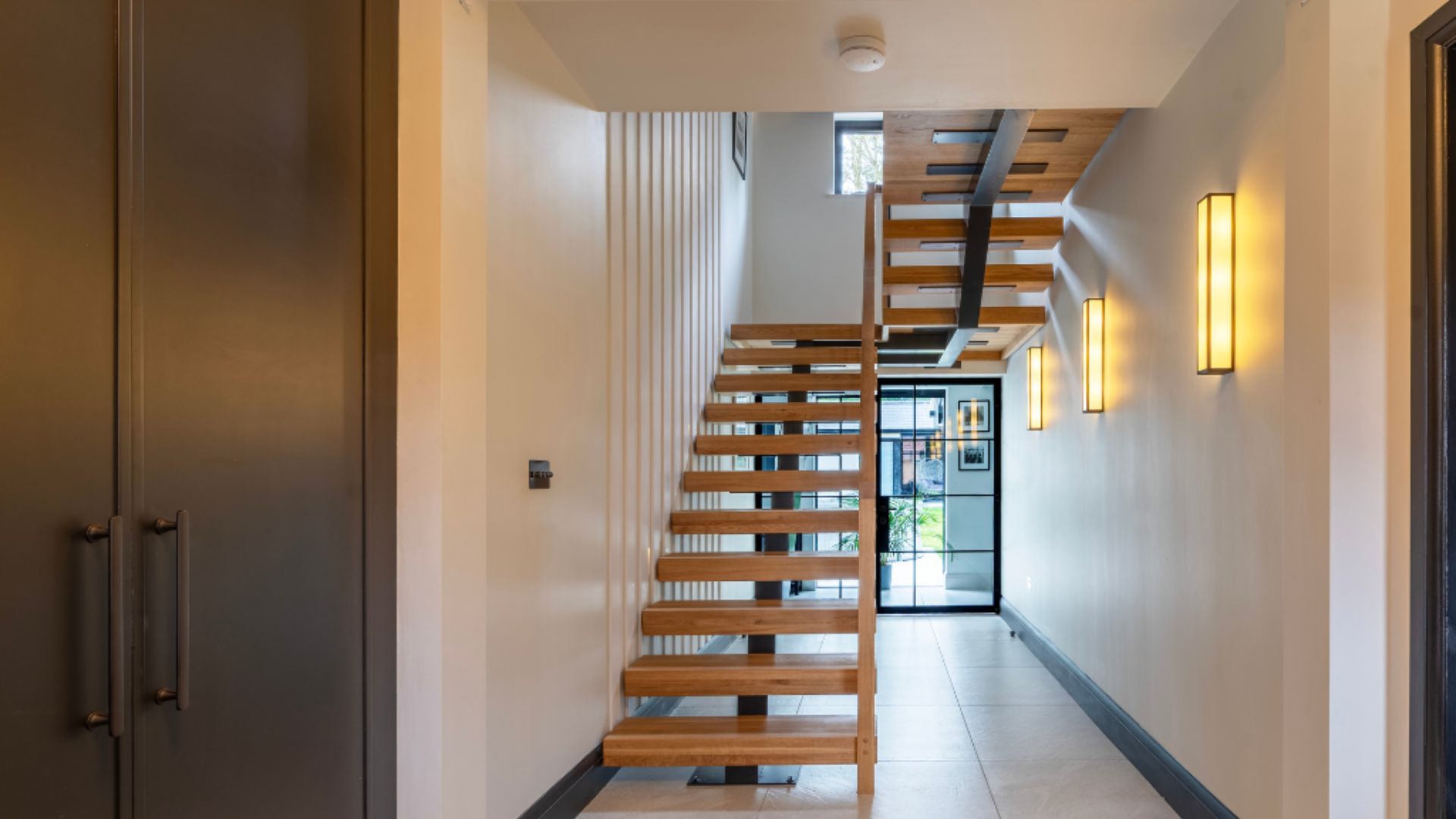
That may involve wider hallways that allow natural light to travel deeper into the property. It could be subtle changes in ceiling height that creates variation and atmosphere between spaces. Or it may simply be ensuring sightlines feel intentional as you move through the home.
.jpg)
Staircases As Architectural Features
Staircases are often one of the most overlooked opportunities within residential architecture.
In many homes, they are treated as purely practical elements. Yet when approached thoughtfully, they can become one of the defining architectural features within a property.
The staircase often sits at the centre of how the home connects vertically and visually. It influences circulation, framing, light flow and the overall atmosphere between floors.
Material choices, detailing and proportion all contribute towards how the staircase feels within the wider interior.
In some projects, a staircase may create a sculptural focal point within an open-plan setting. In others, it may feel quieter and more understated, helping guide movement naturally through the property without dominating the space.
Both approaches can be equally effective when aligned with the architecture of the home itself.
.jpg)
Closing Thoughts
Often, the spaces that receive the least attention during the design process become the areas that influence daily life the most.
The hallway walked through countless times each day. The staircase viewed from multiple angles across the home. The transition from quieter private areas into larger social spaces.
These are the details that subtly shape how a property feels to live in over many years.
At Kimble Roden, we consider transitional spaces as part of the wider architectural narrative of a home, helping create properties that feel connected, balanced and thoughtfully designed from beginning to end.
If you would like to discuss your project with us, please call 01625 402442 or email us to arrange a free initial consultation.
A Vision Inspired by Outstanding Design


.jpg)


