


We spend a significant amount of our lives inside our homes.
They’re where we sleep, work, eat, rest and spend time with the people closest to us. Yet when designing a home, it can be easy to focus on how it will look without giving the same attention to how it might make us feel.
A healthy home isn’t defined by the addition of a home gym, sauna or dedicated wellness space. While these features may have a valuable role to play, our wellbeing is also influenced by less obvious aspects of the architecture: the quality of the air, the presence of natural light, the level of background noise and whether spaces allow us to feel connected or find privacy when we need it.
In our latest blog, we explore how thoughtful architectural decisions can support physical and emotional wellbeing, creating homes that don’t simply look good, but feel genuinely good to live in.
Natural Light Is About More Than Brightness
Natural light can completely change the experience of a room.
But designing a healthy home isn’t simply about introducing as much glazing as possible. A room flooded with direct sunlight may become uncomfortable at certain times of the day, while another may feel gloomy at the time it is used most frequently.
The more important consideration is how light moves through the home and how that relates to daily life.
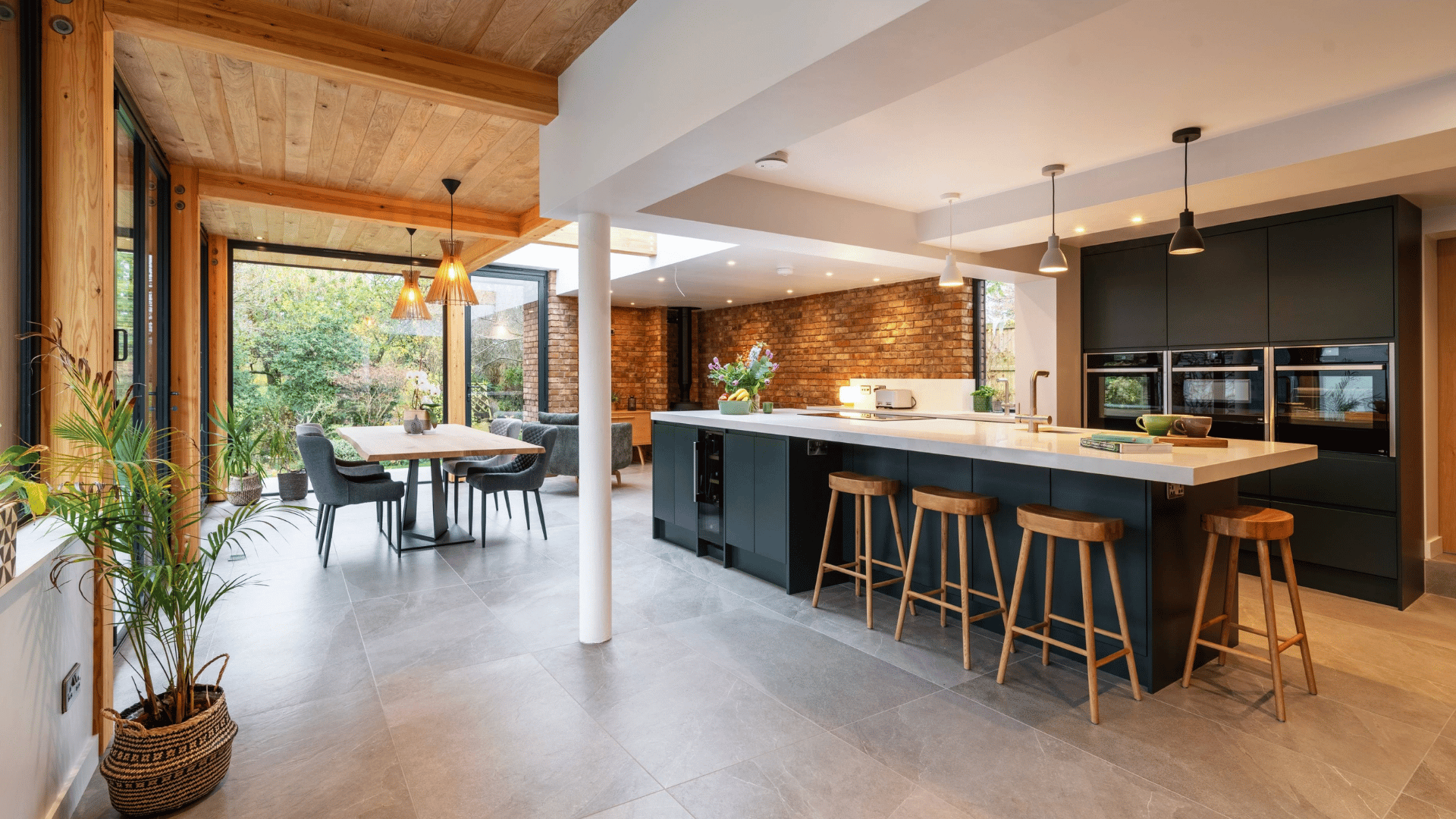
Morning light in a bedroom or kitchen can create a natural sense of energy at the beginning of the day. Softer light in living spaces can help the home feel calmer towards the evening. Carefully positioned windows, rooflights, overhangs and shading can all help manage these changing conditions.
When natural light is considered alongside orientation, room layout and the surrounding landscape, it becomes more than a visual feature. It helps establish a rhythm within the home, allowing different spaces to respond naturally to different times of the day.
The Air You Don’t Notice
Air quality is one of the least visible aspects of a home, but one of the most important.
Everyday activities such as cooking, showering and drying clothes introduce moisture and pollutants into the air. Without effective ventilation, these can accumulate and contribute to condensation, overheating and spaces that feel stale or uncomfortable.
Opening a window can provide a simple connection to fresh air, but it shouldn’t be the only strategy. The design of the home needs to consider how air moves through it, where moisture is produced and how comfortable temperatures can be maintained throughout the year.
The best ventilation and environmental strategies often go unnoticed. You simply experience rooms that feel fresh, comfortable and easy to spend time in.
.png)
Calm Is Something That Can Be Designed
A home can be visually beautiful and still feel tiring to occupy.
Noise travels through open spaces. Hard surfaces cause sound to reverberate. Appliances, televisions, conversations and working from home can all compete with one another, particularly when several people are using the home at the same time.
Acoustic comfort is therefore an important part of wellbeing.
This might involve separating quieter rooms from the busiest areas of the home, containing noise from utility spaces or using materials that soften sound. Doors, partitions and smaller secondary living spaces can also provide moments of retreat without making the home feel disconnected.
Visual calm matters too. Storage can reduce the amount of everyday clutter competing for attention, while clear circulation and well-proportioned rooms can make a home feel easier to understand and move through.
These decisions may not be the first things someone notices, but they influence whether a space feels restful or overwhelming.
.png)
Connection and Privacy Both Matter
Homes need to support two apparently opposing needs.
We want spaces that bring people together, but we also need opportunities to be alone.
Large shared rooms can create a strong sense of connection, allowing cooking, eating and relaxing to happen alongside one another. However, when every activity takes place in the same space, it can become difficult to find quiet, concentrate or step away.
A healthy home provides a balance.
That might mean a window seat away from the main living area, a study that can be closed off or a sequence of connected rooms with different levels of privacy. Even within a larger open space, changes in ceiling height, lighting, furniture arrangement or materials can create smaller areas that feel more sheltered.
Privacy doesn’t have to mean isolation, just as connection doesn’t require every room to be completely open. The aim is to give people choice over how they experience the home at different moments.
.png)
Closing Thoughts
A healthy home isn’t created through a single room, feature or technology.
It comes from a combination of decisions about light, air, acoustics, temperature, connection and privacy. Individually, some of these choices may appear relatively small. Together, they shape how the home is experienced every day.
Good architecture cannot guarantee how someone will feel. But it can remove sources of discomfort, create opportunities for rest and connection, and provide an environment that supports daily life rather than working against it.
Often, the qualities that make a home feel good are the ones we barely notice.
They simply make it easier to feel comfortable, calm and at home.
If you would like to discuss your project with us, please call 01625 402442 or email us to arrange a free initial consultation.
A Vision Inspired by Outstanding Design

.jpg)


