

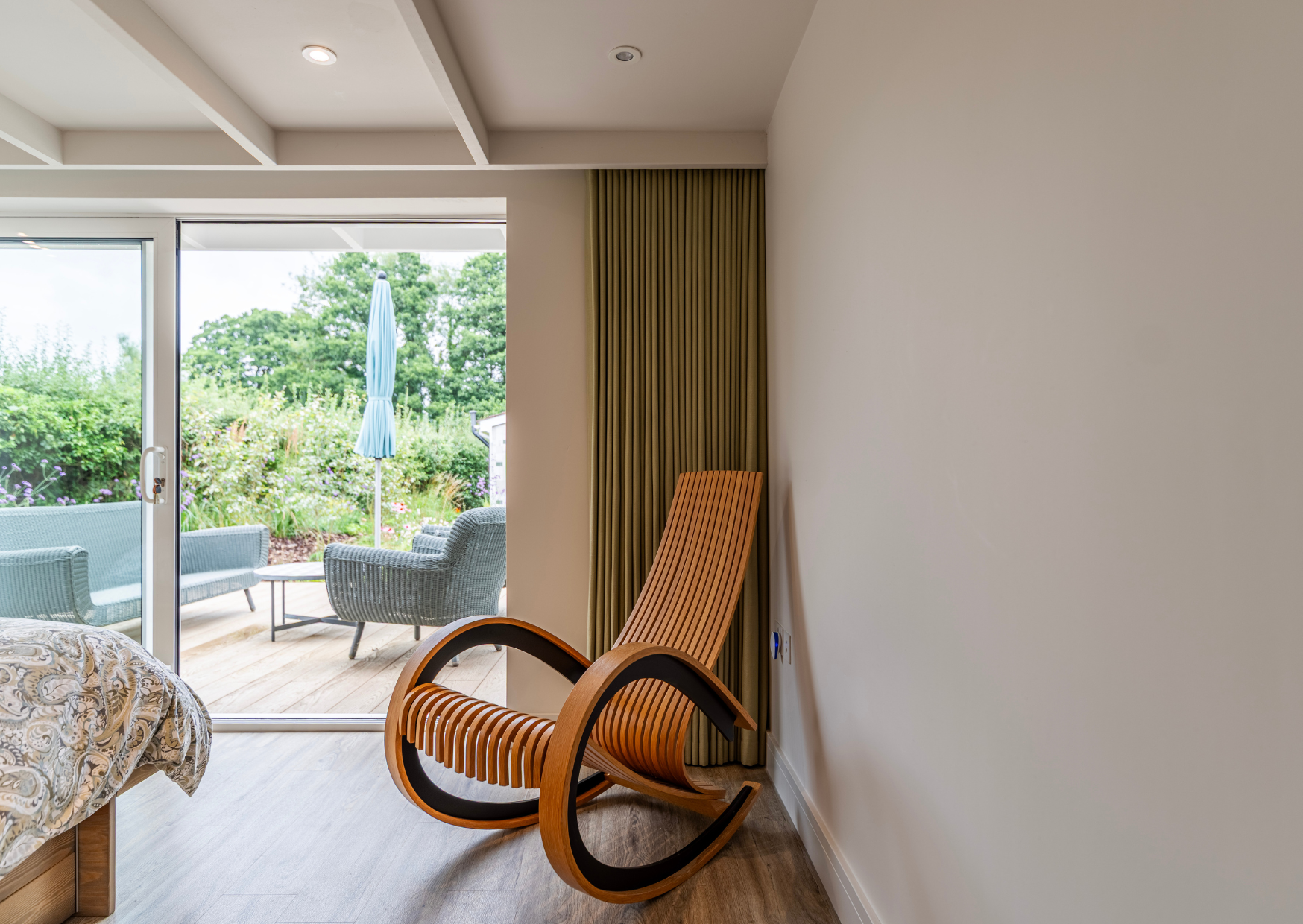
Some homes still feel right decades after they were built. Others begin to feel dated far sooner than expected.
This difference is rarely about style alone. It is about whether a home was designed with longevity in mind - not just structurally, but in how it supports changing lives and evolving relationships with space.
In our latest blog we discuss how intelligent, forward thinking design and a close understanding of evolving lifestyles can create homes that age well.
At Kimble Roden, we believe that a home that ages well does so on three levels: architecturally, practically and emotionally.
A home that ages well does not resist change - it accommodates it.
Architectural longevity comes from clarity of form, proportion and structure.
Practical longevity comes from layouts that adapt quietly as needs evolve.
Emotional longevity comes from spaces that continue to feel comfortable, familiar and intuitively right over time.
When these elements are in tune, a home can remain relevant over decades and without constant intervention.
.png)
Architectural Decisions That Endure
Certain architectural principles are remarkably resilient.
Balanced proportions. Natural light considered carefully throughout the day. Materials that develop character rather than degrade. Spatial hierarchies that make sense regardless of how a house is furnished or occupied.
These decisions are not tied to trends. They provide a framework that allows a home to evolve without losing its identity.
When architecture is resolved at this level, change becomes a layer - not a disruption.
.png)
Designing for Change Without Future Disruption
Life is far from static.
Working patterns shift. Relationships evolve. The balance between social space and privacy changes over time.
What matters is not predicting every future scenario, but creating a structure that can absorb change without requiring fundamental alteration.
Flexible layouts, rooms that can be reinterpreted, and circulation that supports multiple patterns of use all contribute to this adaptability.
The home evolves naturally, rather than being forced to catch up.
.png)
Emotional Longevity: Why Some Homes Still Feel Right
The most overlooked aspect of longevity is emotional response.
Some homes continue to feel reassuring, comfortable and quietly uplifting years after completion.
Others on the other hand, despite significant investment, can begin to feel tiring or disconnected.
This often comes down to the atmosphere.
Light, scale, materiality and flow influence how a space is experienced over time.
When these elements are carefully considered, the home continues to support wellbeing long after novelty fades.
.png)
Closing Thoughts
A home that ages well is not one that avoids change, but one that welcomes it without losing clarity or character.
By designing with architectural, practical and emotional longevity in mind, homes remain places of comfort, identity and quiet confidence for decades to come.
At Kimble Roden, this long-term perspective shapes how we approach every project - creating homes that feel considered on day one, and still feel right many years later.
If you would like to discuss your project with us, please call 01625 402442 or email us to arrange a free initial consultation.
A Vision Inspired by Outstanding Design


.jpg)


